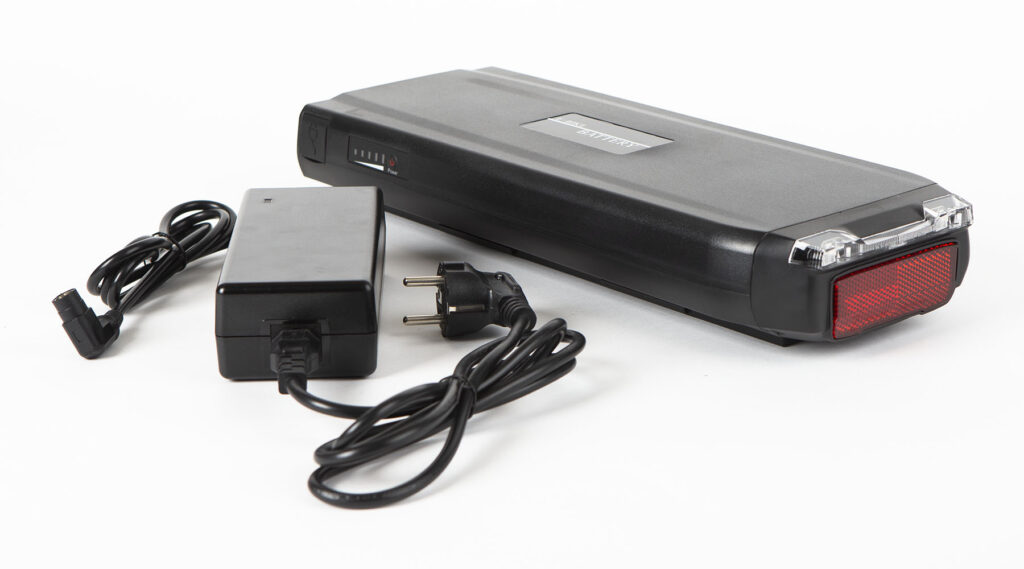
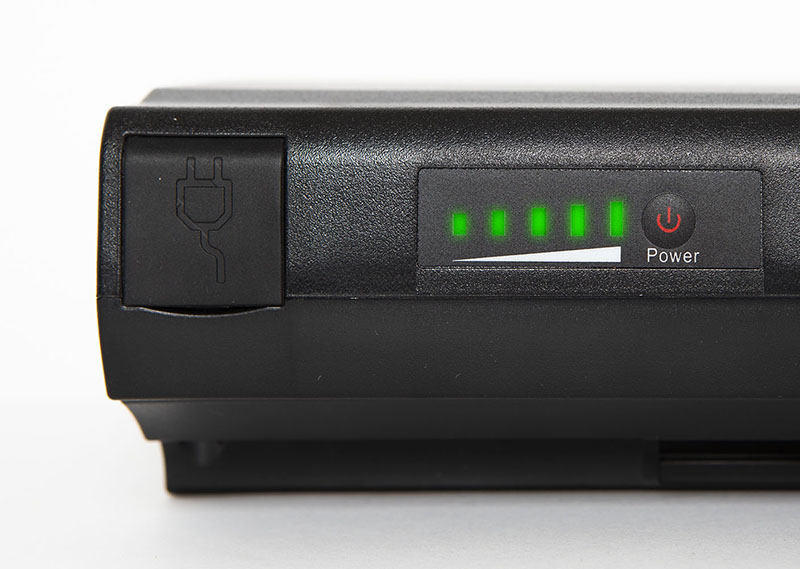
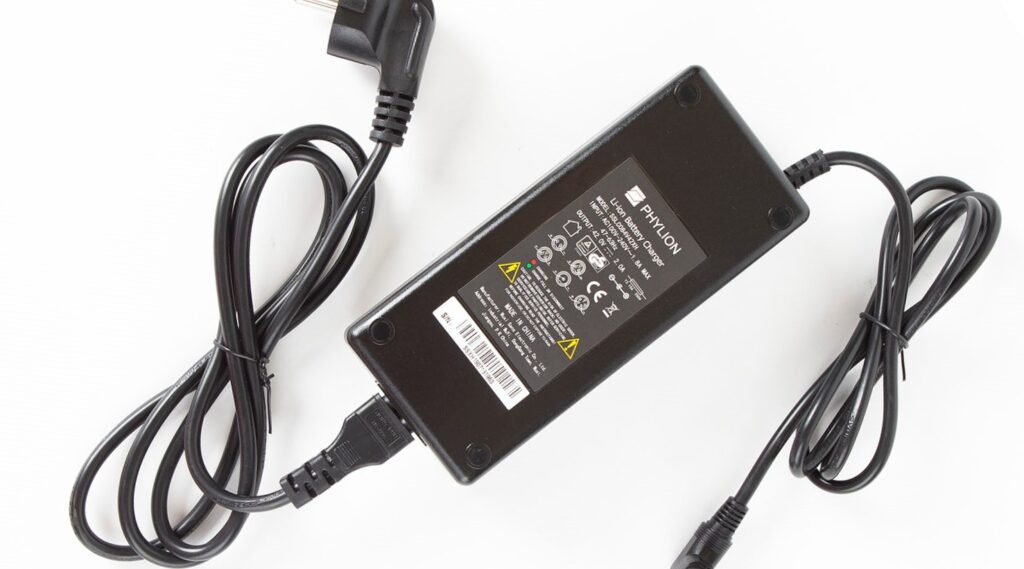
How do you charge a bike battery correctly?
Correct charging is one of the most important factors for a long lifespan.
Advice for daily use:
- Always use a suitable or original charger
- Preferably charge the battery at room temperature
- Allow a cold battery to reach room temperature before charging
- Unplug the charger from the socket after it is fully charged
- Store the charger in a dry place
- Regularly check if charging plugs are clean and dry
And avoid:
✘ Charging in freezing temperatures
✘ Long-term exposure to extreme heat
✘ Damaged charging cables
✘ Using unsuitable chargers
Are you looking for a replacement or original charger? View our range of bike battery chargers HERE. Use filters like “brand”, “output voltage”, and “number of pins” to find the right charger.
Are you experiencing charging issues? Consult our self-diagnosis HERE to determine the cause of the problem.
Does a bike battery need to be completely empty before charging?
No. This used to be the case with some battery technologies, but for modern Li-ion batteries, the opposite is true.
A Li-ion battery has no memory effect. Regular top-up charging is therefore not a problem and can even be beneficial for its lifespan.
So you don’t have to wait until the battery is completely empty before charging again.
How do you extend the lifespan of a bike battery?
The lifespan of a bike battery is determined by both usage and calendar age.
On average, a high-quality bike battery lasts between 5 and 8 years. With intensive or incorrect use, this may be shorter, while careful management can actually extend the lifespan.
Tips for maximum lifespan
- Do not charge the battery more often than necessary, but do charge it regularly
Charging also causes wear to the battery. Therefore, do not charge it after every short ride, but do charge the battery at least once a month for at least 1-2 hours. This means that even if the battery is not used, you should still connect it to the charger for about 1-2 hours per month. - Store the battery in a dry and frost-free place
A battery performs best at a temperature of approx. 25°C. However, a battery lasts longest when kept cool. Aging is a chemical process that accelerates as it gets warmer. If you are not using the battery, it is best to store it as cool as possible (above zero degrees). Electronics and moisture do not go well together, so ensure a dry storage location. - Charge an empty battery immediately
You should charge an empty battery immediately to prevent it from going into deep discharge and becoming unchargeable. - Do not leave a battery unused for months
If a battery is not used, the battery cells can become unbalanced (loss of capacity) or even defective. A battery stays in good condition by using it regularly (charging and discharging). - Protect the battery from extreme heat
Do not leave the battery (which is often black) in bright sunlight or next to a heat source (radiator). Excessive temperatures can damage the battery cells or worse. - Use only suitable chargers
A voltage or amperage that is too high, as well as using the wrong charging plug, can cause damage to the battery. - Regularly check the charge status during storage.
Storing a bike battery during winter
Many problems arise during the winter period.
When a bike is not used for a long time, the battery continues to consume energy slowly. Without periodic charging, deep discharge can eventually occur. Additionally, cells can become unbalanced or even damaged if the battery is not used for too long.
Ideal storage conditions:
- Dry room
- Frost-free
- Between approximately 5°C and 15°C
- Store the battery partially charged (approx. 80%)
- Not directly next to a heat source
Check the battery at least every 6-8 weeks and recharge it for at least 1 hour every 2 months.
Preventing deep discharge
A deep-discharged battery is one of the most common causes of irreparable damage.
In the event of deep discharge, the voltage of one or more battery cells drops below the minimum safe value. The BMS can then block the battery to prevent further damage, meaning the battery no longer registers that a charger is connected and therefore can no longer be charged.
Causes of deep discharge:
- Long-term storage without charging
- Leaving the battery empty for months
- Defective battery cells
- Internal faults
Prevent deep discharge:
- Charge at least every two months
- Do not store an empty battery for longer than necessary
- Replace the battery in time when the capacity decreases significantly
Why does a bike battery’s capacity decrease?
All Li-ion batteries age.
Over time, the maximum capacity slowly decreases. This reduces the range. This process is influenced by:
- Age (chemical process in the battery cells)
- Usage
- Temperature
- Storage conditions
- Quality of the battery cells
Capacity loss is normal and is part of the characteristics of Li-ion technology.
Common mistakes when using a bike battery
- Not charging the battery for months: The main cause of deep discharge.
- Leaving the battery in a cold shed: Every degree colder than 25°C costs approx. 1% capacity and thus the same in range. This is not harmful to the battery, however.
- Storing the battery next to the heater (in a warm room): A warm battery that is not being used ages at an accelerated rate (chemical processes are faster at higher temperatures).
- Purchasing an outdated battery: A battery also ages when it is not being used. A bike battery that has been in stock for a long time may therefore have a shortened remaining lifespan.
- Using the wrong charger: An incorrect charging voltage can cause damage to the battery or electronics.
Are you experiencing problems with your battery? Click HERE for instructions on how to easily perform a self-diagnosis to find the cause of the problem.
Batteries
When does a bike battery need replacing?
A bike battery does not need to be replaced immediately when the range decreases slightly.
Replacement becomes interesting when:
- The range decreases significantly
- The battery no longer charges fully
- The battery cuts out unexpectedly
- The BMS indicates a fault
- The battery is more than 5 to 8 years old
Frequently asked questions about bike battery maintenance
- How often should I charge my bike battery?
Even when you are not using the bike, we advise charging the battery at least once every two months. - Can a bike battery break from sitting idle for a long time?
A battery that has not been charged for a long time can become deep-discharged, which can cause permanent damage. - What is the best storage temperature for a bike battery?
Preferably between approximately 5°C and 15°C in a dry, frost-free room. - Can I store a bike battery in the shed?
Yes, provided the shed is dry and frost-free. - How long does a bike battery last?
On average between 5 and 8 years, depending on usage, temperature, and maintenance. - Why does my bike battery run out faster than before?
This is usually caused by natural aging of the battery cells, lower temperatures, or wear of the battery. - Is a new battery always better than a heavily discounted old stock battery?
In many cases, yes. A recently produced battery has generally undergone less calendar aging than a battery that has been in storage for years. - What is the successor to the Phylion XH370?
The XH370 was first succeeded by the EBG370 and, from model year 2026, by the technically updated Joycube EBG360.